
How Can We Control Negative Thoughts? A Scientific & Psychological Perspective
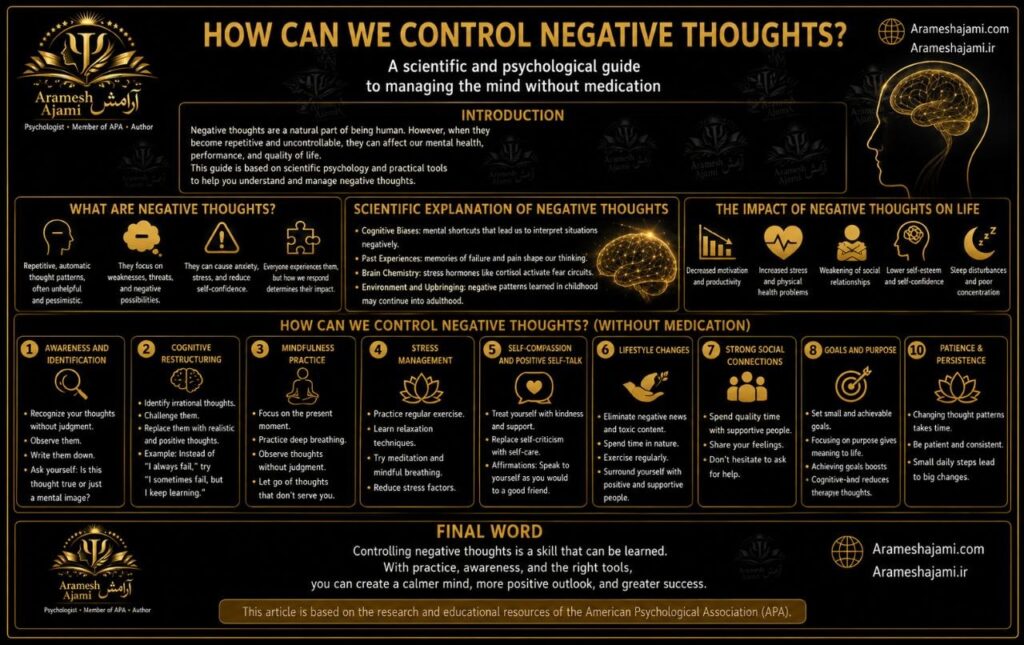
How Can We Control Negative Thoughts? A Scientific & Psychological Perspective Negative thoughts are a normal part of the human mind. However, when they become repetitive, persistent, and difficult to manage, they can affect mental health, relationships, productivity, and overall quality of life. According to psychological research, negative thinking often develops through a combination of […]
Performance Anxiety: The Fear of Not Being Good Enough

Performance Anxiety: The Fear of Not Being Good Enough Performance anxiety is a state in which a person is constantly worried about how others judge their abilities. This type of anxiety can appear in academics, work, public speaking, and even social relationships. Perfectionists are particularly vulnerable to performance anxiety. They often set extremely high standards […]
The Mental Fatigue of the Digital Generation

The Mental Fatigue of the Digital Generation Living in the digital age has exposed the human brain to an unprecedented volume of information. Social media platforms, messaging apps, and short-form content constantly bombard the mind with rapid and numerous stimuli. Psychologists refer to this condition as “cognitive fatigue”—a state in which the brain gradually loses […]
Why Does the Human Brain Focus More on Painful Memories?

Why Does the Human Brain Focus More on Painful Memories? The human brain is naturally more sensitive to negative experiences. Psychologists refer to this tendency as the “negativity bias.” From an evolutionary perspective, paying closer attention to threats helped humans survive. As a result, the brain processes painful memories more deeply to reduce the likelihood […]
Emotional Dependence on Others’ Approval

Emotional Dependence on Others’ Approval The need for social approval is a natural part of human psychology, but problems begin when a person’s sense of self-worth becomes entirely dependent on the opinions of others. People who are dependent on others’ approval often have fragile self-esteem and constantly seek praise, attention, or acceptance. Social media has […]
Investigating the consequences of multiple premarital relationships on the quality of future marital relationships

This article examines the possible effects of multiple romantic relationships and low commitment patterns before marriage on the quality of future marital relationships. Psychological findings suggest that unstable emotional experiences can influence the formation of an individual’s attachment style, trust, marital satisfaction, and communication skills. The aim of this article is to provide a non-judgmental analysis based on behavioral and psychological outcomes.
Examining the role of the family in shaping the future of children; the consequences of neglect and extreme strictness from a psychological perspective

The family is the first and most important educational institution in human life and plays a decisive role in the development of personality, mental health, and social future of children. Parenting styles can have profound effects on the self-confidence, independence, social skills, and emotional health of children and adolescents. Among them, two harmful educational models, namely “parental neglect” and “extreme strictness,” are known to be the most important factors in causing psychological and behavioral problems in children. The purpose of this article is to scientifically examine the psychological consequences of these two educational styles and their impact on the future of children. Psychological findings show that the lack of balance in education can lead to anxiety, reduced self-esteem, identity problems, aggression, and weakness in social relationships.
Psychological study of the consequences of lack of emotional attention between couples after marriage and its impact on mental health and family stability
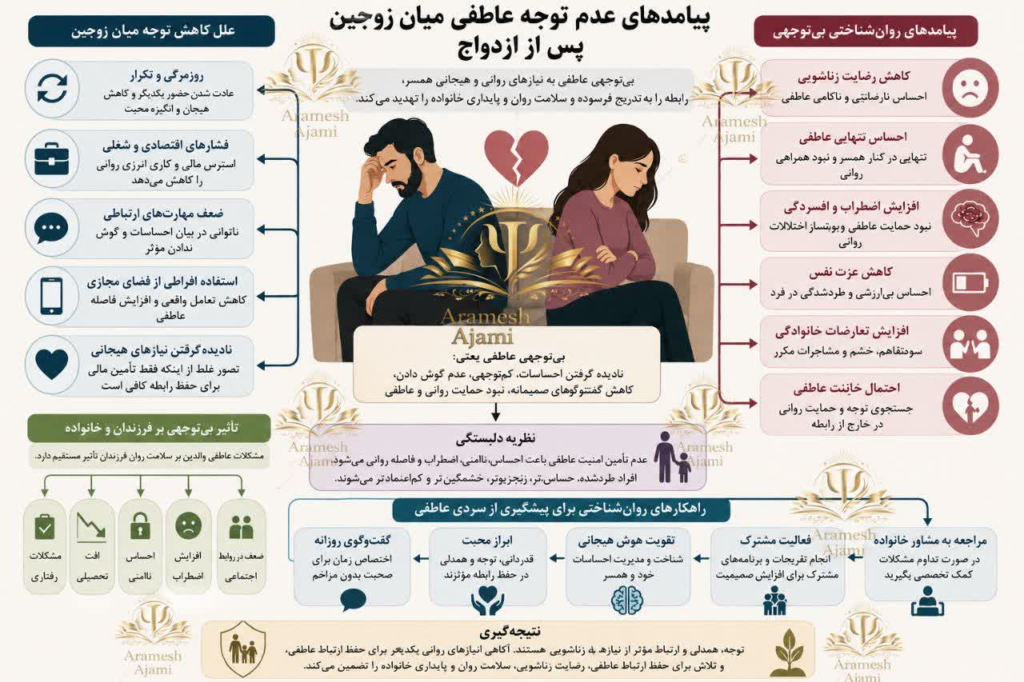
Marital relationships are considered one of the most important human relationships, the quality of which has a direct impact on mental health, personal satisfaction, and family stability. One of the important factors in weakening couples’ relationships is the decrease in emotional and psychological attention after marriage. Many couples, after living together for a while, neglect each other’s emotional needs due to economic, career, and daily pressures. This neglect can lead to emotional coldness, decreased marital satisfaction, anxiety, depression, and increased family conflicts. The purpose of this article is to scientifically examine the psychological effects of couples’ lack of attention to each other and analyze its consequences on individual and family health. Family psychology findings show that the lack of emotional support, effective communication, and empathy are among the most important factors in the gradual collapse of marital relationships.
A psychological study of the role of intimacy in couples’ relationships and its impact on mental health and marital satisfaction.

Intimacy in couples’ relationships is considered one of the most fundamental components of family health and the stability of a common life. Psychologists consider intimacy to be more than physical proximity and include emotional bonding, empathy, mutual trust, and the ability to freely express emotions. Research in the field of family psychology shows that the quality of emotional communication between couples is directly related to mental health, marital satisfaction, and reduced family conflicts. The purpose of this article is to examine the different dimensions of intimacy and analyze its impact on couples’ mental health based on psychological theories. The results of the studies show that couples who enjoy emotional intimacy and effective communication skills experience lower levels of anxiety, depression, and psychological stress, and enjoy greater emotional stability in their lives together.